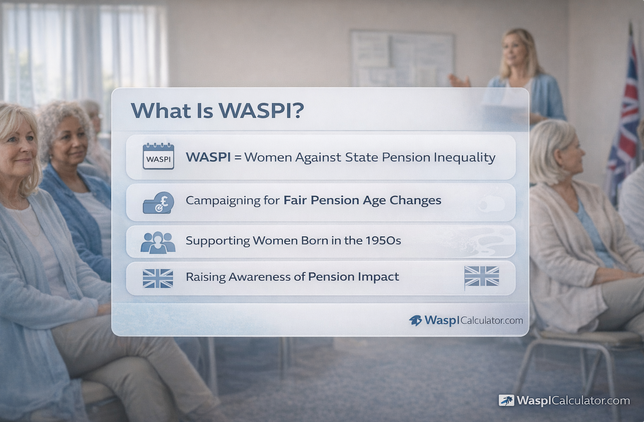
The term WASPI has become widely used across the UK in discussions about pensions, retirement age, and compensation. Yet many people are still unclear about what it actually means, who it affects, and why it became such a major national issue.
What Does WASPI Stand For?
WASPI stands for Women Against State Pension Inequality.
It is a campaign group formed to represent women who were affected by changes to the UK State Pension age, particularly those born in the 1950s.
The WASPI campaign does not oppose equalising the pension age for men and women. Instead, it argues that:
-
Changes were introduced too quickly
-
Many women were not properly informed
-
Thousands had little or no time to adjust their retirement plans
-
The way changes were communicated caused financial hardship
Why Did the State Pension Age Change?
The 1995 Pensions Act
Before 1995:
-
Women could claim the State Pension at 60
-
Men could claim at 65
The Pensions Act 1995 introduced changes to equalise the State Pension age for men and women. Under this law:
-
Women’s State Pension age would gradually rise from 60 to 65
-
The change would be phased in between 2010 and 2020
The goal was equality and long-term sustainability of the pension system.
The 2011 Pensions Act – Acceleration of Changes
In 2011, the government introduced further legislation that:
-
Accelerated the timetable
-
Increased the State Pension age to 66
-
Reduced the notice period for many women
This meant some women saw their pension age rise by up to six years, with little time to prepare.
Who Are “WASPI Women”?
The term WASPI women generally refers to:
-
Women born between 6 April 1950 and 5 April 1960
-
Those affected by changes to the State Pension age
-
Women who say they were not adequately informed of the changes
Many had already made life plans — including retirement, caring responsibilities, or reduced working hours — based on the expectation of receiving their pension at 60.
What Is the WASPI Campaign About?
The WASPI campaign argues that:
-
The government failed to communicate changes clearly
-
Millions of women were unaware of the scale of the changes
-
The lack of notice caused financial and emotional hardship
-
Transitional protection should have been provided
Importantly, WASPI does not argue against equal pension ages — only the way the changes were introduced.
What Did the Ombudsman Find?
The Parliamentary and Health Service Ombudsman (PHSO) investigated complaints about how the Department for Work and Pensions (DWP) communicated the changes.
The Ombudsman found:
-
Maladministration in how changes were communicated
-
Delays and failures in providing clear, timely information
-
That many women were not given sufficient notice
However, the Ombudsman did not rule on the legality of the pension age change itself — only on how it was communicated.
Did the Government Accept the Findings?
The UK Government acknowledged the Ombudsman’s findings but stated that:
-
The pension age changes were lawful
-
Any compensation scheme would be costly
-
Decisions must balance fairness with public spending
As of the latest updates, no automatic compensation scheme has been introduced, although the issue remains under political and public review.
Is WASPI Compensation Guaranteed?
No.
There is currently no guaranteed compensation scheme for WASPI women.
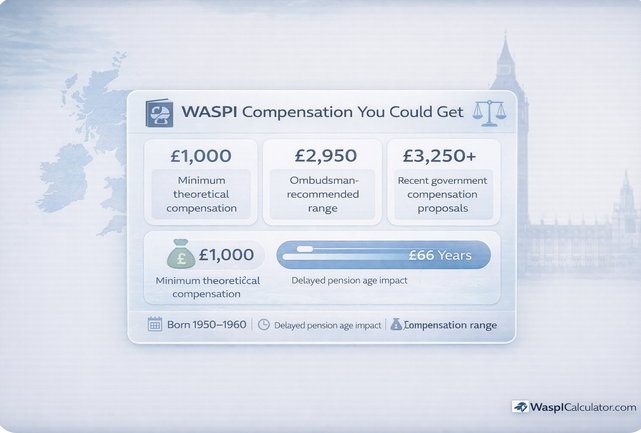
While public discussion has referenced compensation ranges (often between £1,000 and £2,950), these figures are:
-
Not confirmed payments
-
Not legally guaranteed
-
Based on Ombudsman impact level guidance
Any future compensation would require government approval and formal implementation.
Is There an Official WASPI Calculator?
No.
There is no official GOV.UK WASPI calculator.
However, many people use independent tools to:
-
Estimate whether they are affected
-
Understand their State Pension age
-
See potential outcomes based on public information
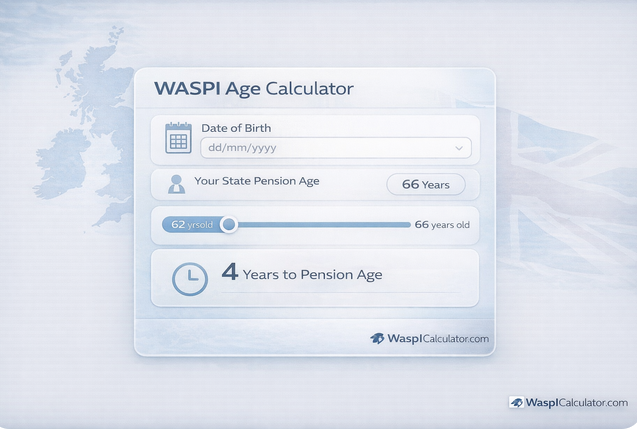
➡️ You can use our WASPI Calculator to check your position and understand how the changes may have affected you.
Common Misunderstandings About WASPI
1. “WASPI is a government scheme”
No — it is a campaign group, not a government program.
2. “All 1950s women will receive compensation”
There is currently no confirmed entitlement.
3. “The pension age change was illegal”
Courts have ruled the legislation itself was lawful; the issue relates to communication and notice.
4. “Compensation is automatic”
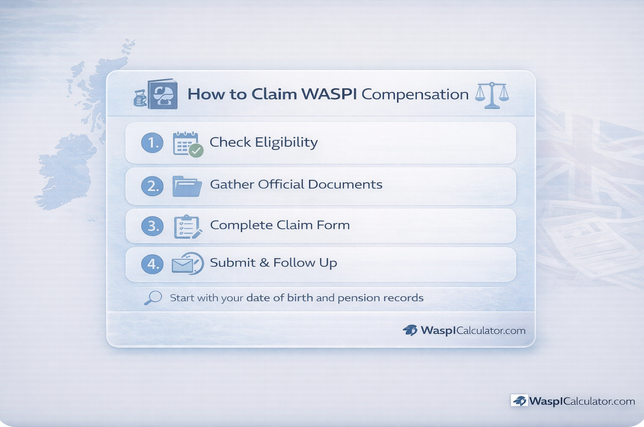
No claims process exists at this time.
What Should You Do Next?
If you think you may be affected:
-
Check your State Pension age
-
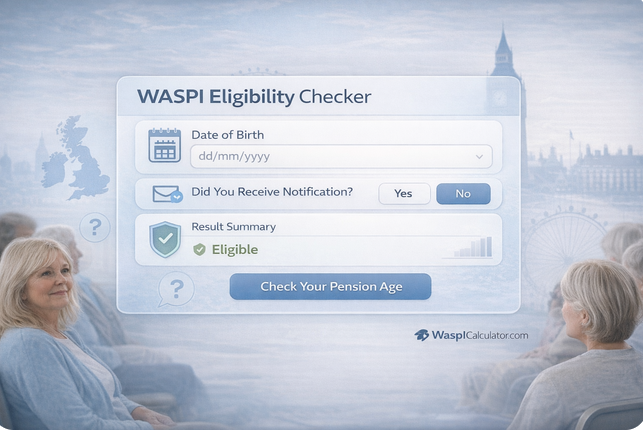
Use a WASPI eligibility or calculator tool
-
Follow official updates
-
Be cautious of scam sites claiming guaranteed payouts
You can continue with:
-
👉 WASPI Calculator – Check Your Status
-
👉 WASPI Eligibility Guide
-
👉 WASPI Compensation Explained
-
👉 Latest WASPI Updates
Final Words
WASPI refers to a group of women affected by changes to the UK State Pension age who argue they were not properly informed.
The issue has led to:
-
Ombudsman investigations
-
Parliamentary debate
-
Ongoing public discussion
While compensation has been discussed, no automatic payments currently exist. Understanding your position and staying informed is the best next step.